
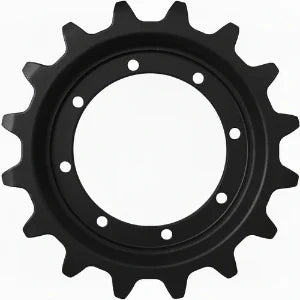
Sprockets are one of the most important—and most abused—components of a skid steer or track loader undercarriage. As part of the final drive system, sprockets transfer power from the machine to the rubber tracks, allowing your equipment to move forward and reverse. When sprockets wear out, performance drops quickly and track damage often follows.
Knowing how sprockets work and what causes them to wear will help you identify when replacement is necessary.

What a Sprocket Does
A sprocket is a toothed wheel that meshes directly with the steel links embedded inside a rubber track. As the sprocket turns, its teeth engage the track links and impulse the machine forward or backward.
The basic anatomy of a sprocket includes:
-
Central hub – mounts to the final drive
-
Outer ring with teeth – engages the steel track links
These teeth are precisely shaped and evenly spaced so they match the track’s link pattern. When this alignment is compromised due to wear, power transfer becomes inefficient and damaging.
Key Sprocket Terminology to Understand
When inspecting or replacing sprockets, several characteristics are important:
-
Pitch
Pitch refers to the distance between two consecutive steel links in the track. This measurement determines the correct sprocket size and type for your machine. Incorrect pitch leads to poor engagement and rapid wear. -
Teeth
Sprocket teeth interlock with the track links to transmit power. Over time, these teeth wear down, sharpen, or become uneven, reducing their ability to grip the track properly. -
Bolt Holes
Bolt holes secure the sprocket to the final drive. Excessive wear or damage around these holes can lead to improper mounting or vibration during operation.
Conditions That Accelerate Sprocket Wear
Certain operating environments dramatically reduce sprocket life:
-
Mud and sand
Running your machine in muddy or sandy conditions accelerates wear on sprockets and other undercarriage components. Sand, pebbles, and fine debris act like sandpaper, increasing friction between the sprocket teeth and track links. -
Snow and mud buildup
When snow or mud packs between sprocket teeth, the steel track links ride higher than intended. This causes premature wear on the tips of the sprocket teeth. Over time, the track may begin to slip or skip over the teeth, increasing friction and wear on both the track and sprocket.
Check Track Tension
Track tension plays a major role in sprocket life. An excessively loose rubber track can slap against the sprocket at higher ground speeds. This creates high-impact loads on the sprocket teeth, leading to accelerated wear, chipping, or deformation.
Maintaining proper track tension helps ensure smooth engagement and reduces unnecessary stress on the sprocket and final drive.
Signs Your Sprockets Need Replacement
While gradual wear is normal, sprockets should be replaced when:
-
Teeth become pointed, hooked, or uneven
-
The track slips or skips under load
-
Excessive vibration or noise is present
-
Track and sprocket wear accelerate despite proper tension
Ignoring worn sprockets can quickly damage expensive rubber tracks and other undercarriage components.
Final Thoughts
Sprockets are critical to the performance of your skid steer or track loader. Operating conditions, debris buildup, and improper track tension all contribute to wear. Regular inspections, proper cleaning, and correct track tension will extend sprocket life—but once teeth wear beyond their intended shape, replacement is the only solution.
Catching sprocket wear early protects your tracks, final drives, and bottom line.