
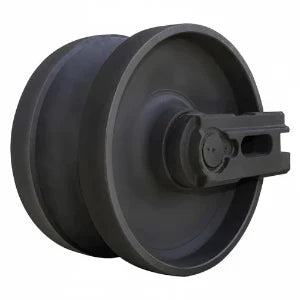
Idlers are a key but often overlooked part of a skid steer or track loader undercarriage. Located at the front and rear of the track system, idlers play a vital role in keeping the track aligned, tensioned, and operating smoothly. When idlers wear out, performance suffers—and the risk of track damage or derailment increases.
Understanding what idlers do and recognizing the warning signs of failure can help you avoid unexpected downtime and costly repairs.
What Idlers Do in the Undercarriage
While track rollers handle most of the machine’s weight, idlers still bear a portion of the load during operation. Their main functions include:
-
Preventing track derailment by keeping the track properly aligned
-
Guiding the track so it rotates smoothly in a continuous loop
-
Helping maintain proper track tension
On the front of the machine, the idler works together with the track adjuster to tension the rubber track correctly. Proper tension is critical for efficient operation, reduced wear, and overall undercarriage longevity.
How Idlers Wear Over Time
Because idlers carry some of the machine’s load and are constantly in contact with the track, wear is unavoidable. Over time:
-
The idler shell can chip and wear down, gradually reducing its size
-
Bearings inside the idler experience fatigue
-
Once the bearings wear out, they can fail completely and fall off the idler’s shell
When this happens, the idler can no longer rotate as intended, leading to metal-on-metal contact and rapid deterioration.
The Most Common Sign: Clanging Noises
The most noticeable and common indicator of idler failure is a clanging or banging noise coming from the undercarriage.
This noise occurs when the idler’s shell begins riding directly on the shaft due to bearing failure. Instead of rotating smoothly, the shell drags or shifts, creating a loud, irregular sound—especially noticeable while traveling or turning.
Any clanging noise from the track system should be addressed immediately, as continued operation can damage the track, shaft, or surrounding components.
Why Replacing Worn Idlers Matters
Failing idlers can lead to poor track alignment, improper tension, and an increased risk of track derailment. They also place additional stress on rollers, sprockets, and the rubber track itself.
Replacing worn idlers at the right time helps:
-
Maintain smooth track rotation
-
Protect other undercarriage components
-
Reduce downtime and repair costs
-
Extend the life of your tracks
Final Thoughts
Idlers may not carry the full load of your skid steer or track loader, but they play a critical role in track guidance and tension. Chipping, bearing wear, and clanging noises are clear signs that replacement may be needed.
Regular undercarriage inspections and prompt attention to unusual noises can help you catch idler issues early—keeping your machine running efficiently and your jobsite productive.