
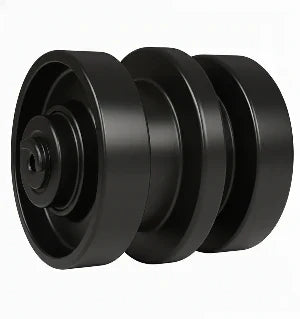
Bottom rollers play a critical role in the performance and longevity of your skid steer or track loader. These rollers support the machine’s weight, guide the track, and keep your undercarriage running smoothly. Because they’re constantly exposed to dirt, debris, and heavy loads, bottom rollers are among the most common undercarriage components to wear out.
Knowing the warning signs of failing rollers can help you avoid costly downtime and prevent damage to other undercarriage parts. Here’s how to tell when it’s time to replace them.
Bearings Take the Most Abuse
Inside each bottom roller are bearings that carry the load and allow the roller to spin freely. These bearings experience the most fatigue over time and are usually the first internal components to fail.
As bearings wear, the roller can no longer rotate smoothly. Left unchecked, bearing failure can lead to internal damage that makes the entire roller unusable.
Watch for Oil Sweating Around the Roller
One of the earliest warning signs of roller failure is excessive oil sweating. This appears as a wet or oily film on the outside of the roller.
Oil sweating indicates that the seals are beginning to fail. When seals break down, lubrication escapes and contaminants enter the roller, accelerating bearing wear. While a small amount of residue can be normal over time, noticeable oil buildup is a sign the roller is nearing the end of its service life.
Listen for Squeaks or Squeals
An unusually noisy undercarriage should never be ignored. A squeaky or squealing noise is a clear sign of bottom or top roller failure.
As track rollers lose lubrication, friction increases. Eventually, the bearings can break apart and fall out of the roller. When this happens, the shaft may hang loosely inside the roller housing, producing a loud, high-pitched squealing sound during operation.
If your machine suddenly sounds louder or different than normal, it’s time for an inspection.
Check for Excessive Movement
A simple hands-on inspection can also reveal worn-out rollers. With the machine safely parked and the track tension relieved if possible, try to wiggle the roller by hand.
A healthy roller should feel solid and secure. If the roller moves easily or feels loose, especially side to side, the bearings are likely worn or completely gone. This is a strong indicator that replacement is necessary.
Why Timely Replacement Matters
Ignoring worn bottom rollers can lead to uneven track wear, increased stress on other undercarriage components, and reduced machine efficiency. In severe cases, failed rollers can cause track misalignment or additional damage that significantly increases repair costs.
Final Thoughts
Bottom rollers are wear items, but catching problems early can save you time and money. Keep an eye out for oil sweating, listen for squeaks or squeals, and periodically check for looseness by hand. Since bearing failure is the most common cause of roller issues, these symptoms are strong indicators that replacement is needed.
Regular inspections and timely maintenance will keep your skid steer or track loader running smoothly and extend the life of your undercarriage.