
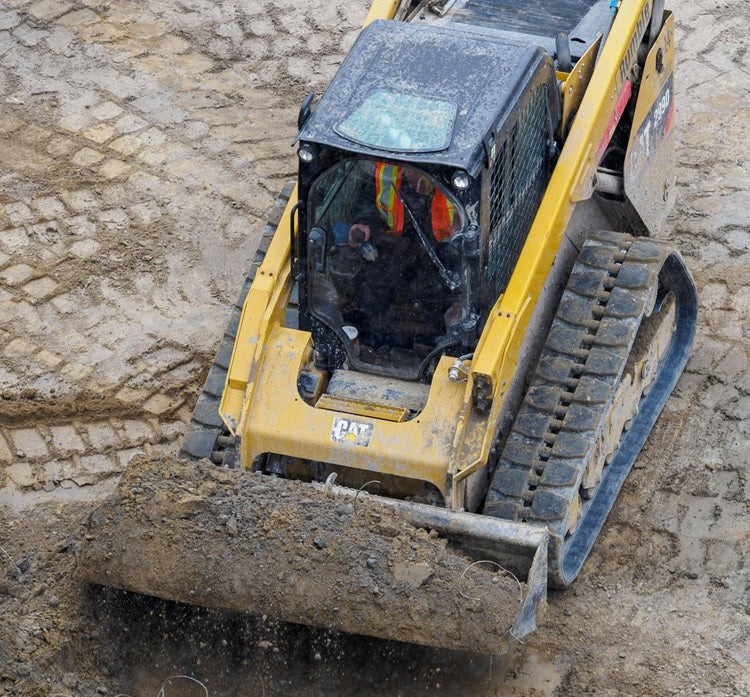
When it comes to compact track loaders, operators often ask: "What is the best skid steer track pattern?" The honest answer is that there is no single "best" tread pattern. While one track might dominate in a muddy trench, it could be a vibrating nightmare on a concrete parking lot. The "best" pattern is entirely dictated by the terrain you work on most frequently. Choosing the right tread is the difference between maximum productivity and premature wear on your machine—and your body.
Here is a breakdown of the four most popular tread patterns and where they truly shine.
1. C-Lug Tread (The Versatile All-Rounder)
The C-Lug tread (also known as C-Pad or C-Pattern) is characterized by its distinct C-shaped blocks. It is one of the most popular choices for operators who jump between different job sites daily.
-
Design: Features notches within the "C" shape to increase flexibility and durability.
-
Best For: A mix of on-road and off-road work, including clay, mud, gravel, and sand.
-
Key Advantage: It offers an increased number of edges, which provides superior traction on hills and slopes. It is designed to offer a smooth ride on hard surfaces like concrete while still having enough "bite" for soft ground.
2. Zig Zag Tread (The Winter & Mud Specialist)
If you are working in the "sloppy" seasons—late fall, winter, or early spring—the Zig Zag (Z-Lug or ZZ) track is your best friend. These are specifically engineered for high-moisture environments.
-
Design: Strategically angled lugs with deep grooves that create a "self-cleaning" action.
-
Best For: Mud, snow, ice, and wet conditions.
-
Key Advantage: Like a V-pattern, these tracks are directional. The high edge count increases friction and grip on slippery surfaces, making them the safest and most effective choice for steep, slick slopes.
3. Staggered Block (The Industry Standard)
The Staggered Block pattern is likely what you’ll see on a dealership floor. It is the most common OEM (Original Equipment Manufacturer) track because it performs reliably across almost any general construction site.
-
Design: Evenly spaced blocks that provide a large contact area with the ground.
-
Best For: Dirt, clay, asphalt, and general landscaping.
-
Key Advantage: The staggered layout ensures even weight distribution, which significantly reduces machine vibration and "bounce." This protects your undercarriage and provides a smoother ride for the operator. It offers a perfect balance of longevity and traction.
4. Multi-Bar (The Hard-Surface Pro)
When your work is primarily on finished surfaces or hard-packed ground, the Multi-Bar tread is the superior choice. This pattern focuses on "flotation" and surface protection rather than aggressive digging.
-
Design: Closely spaced bars running across the width of the track.
-
Best For: Pavement, asphalt, compacted dirt, and sensitive landscaping.
-
Key Advantage: Because the bars are close together, they distribute weight evenly to prevent "scuffing" or scarring of the ground. They also absorb shocks better than any other pattern, making them the most comfortable choice for long shifts on hard surfaces.